Indian cooking is known for its rich flavors, aromatic spices, and diverse techniques. However, many traditional recipes often use a significant amount of oil, which can impact health when consumed regularly. While oil enhances taste and texture, excessive use may lead to long-term health issues. Therefore, learning how to reduce oil consumption without compromising flavor is essential for maintaining a balanced lifestyle.
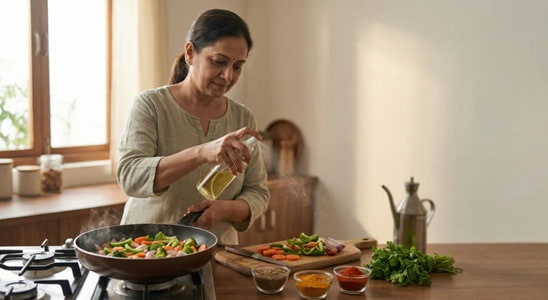
Choose Healthier Cooking Methods
The cooking method plays a major role in oil use. By switching to techniques that require less oil, individuals can significantly reduce overall consumption. Consequently, meals become lighter and healthier.
- Prefer steaming, boiling, and grilling over frying
- Use roasting or baking instead of deep frying
- Try sautéing with minimal oil instead of heavy tempering
- Use non-stick cookware to reduce oil requirement
As a result, dishes retain their flavor while becoming healthier. Therefore, adopting better cooking methods is an effective first step.
Measure Oil Instead of Pouring Freely
Many people add oil without measuring, which often leads to excessive usage. However, controlling quantity helps maintain balance. Consequently, mindful cooking becomes easier.
- Use measuring spoons for accurate quantity.
- Avoid pouring oil directly from the bottle
- Stick to the recommended oil amounts in recipes
- Gradually reduce oil usage over time
As a result, oil consumption decreases without drastically affecting taste. Therefore, portion control plays a key role.
Use Non-Stick and Quality Cookware
The type of cookware directly affects how much oil is required. Non-stick and high-quality utensils prevent food from sticking, reducing the need for extra oil. Consequently, cooking becomes more efficient.
- Non-stick pans require less oil for cooking
- Heavy-bottom utensils distribute heat evenly
- Avoid worn-out cookware that needs more oil
- Use well-seasoned pans for better results
As a result, less oil is needed during cooking. Therefore, investing in proper cookware helps reduce oil usage.
Enhance Flavor with Spices and Herbs
Indian cuisine relies heavily on spices, which can compensate for reduced oil. By focusing on flavor-rich ingredients, dishes can remain tasty even with less oil. Consequently, meals become both healthy and delicious.
- Use fresh herbs like coriander and mint
- Add spices such as cumin, turmeric, and garam masala
- Use ginger, garlic, and green chilies for depth of flavor
- Experiment with dry roasting spices for enhanced taste
As a result, flavor remains strong without excessive oil. Therefore, spices become a healthier alternative.
Modify Traditional Recipes
Many Indian dishes can be prepared with slight modifications to reduce oil content. By making small adjustments, individuals can maintain taste while improving health. Consequently, cooking becomes more balanced.
- Reduce oil in tadka (tempering)
- Replace deep frying with shallow frying
- Use curd or tomato-based gravies instead of oil-heavy ones
- Remove excess oil from curries before serving
As a result, traditional dishes become lighter. Therefore, simple modifications make a big difference.
Avoid Reusing Oil
Reusing oil is a common practice, but it can be harmful to health. When oil is reheated multiple times, it loses its quality and produces harmful compounds. Consequently, it affects both taste and health.
- Avoid storing used oil for future cooking
- Dispose of leftover oil safely
- Use fresh oil for each cooking session
- Limit frying to occasional use
As a result, meals become safer and healthier. Therefore, using fresh oil is important.
Control Portion Size of Oily Foods
Even when oil is used in cooking, controlling portion size can help reduce overall intake. By eating mindfully, individuals can manage their consumption effectively. Consequently, health risks decrease.
- Limit intake of fried snacks
- Avoid frequent consumption of oily dishes
- Balance meals with vegetables and proteins
- Practice mindful eating habits
As a result, oil intake remains under control. Therefore, portion management supports better health.
Adopt Healthier Eating Habits
Reducing oil consumption is not just about cooking techniques; it also involves overall eating habits. By making conscious choices, individuals can maintain a healthier lifestyle. Consequently, long-term benefits become visible.
- Plan meals with balanced nutrition.
- Include more fruits and vegetables
- Reduce dependency on processed foods
- Stay consistent with healthy routines
As a result, overall well-being improves. Therefore, a holistic approach helps reduce oil consumption effectively.
Conclusion
Reducing oil consumption in Indian cooking does not mean compromising on taste. By adopting healthier cooking methods, controlling portions, and using flavorful ingredients, individuals can enjoy delicious meals while maintaining good health. Since excessive oil intake can lead to issues like Heart Disease and Obesity, making small changes becomes essential. Therefore, with mindful cooking and smart choices, it is possible to create healthier versions of traditional dishes and maintain a balanced lifestyle.
FAQs
Q1. How much oil should be used daily?
It is generally recommended to limit oil intake to about 2–3 teaspoons per person per day.
Q2. Can Indian food be cooked without oil?
Yes, many dishes can be prepared with minimal or no oil using methods like steaming and boiling.
Q3. Which oil is best for Indian cooking?
Oils like mustard, olive, and groundnut are commonly used, but moderation is key.
Q4. Does reducing oil affect taste?
Initially, it may feel different, but proper use of spices and herbs can maintain flavor.
Q5. Is it safe to reuse cooking oil?
No, reusing oil can produce harmful compounds and should be avoided.