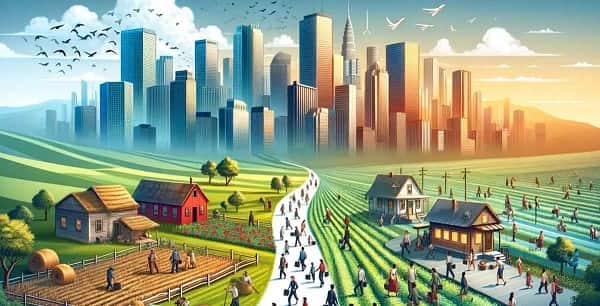
Moving from a village to a city brings a major shift in lifestyle, mindset, and daily habits. While rural life offers simplicity and close community bonds, urban living introduces speed, competition, and modern conveniences. As a result, individuals often experience significant adjustments in their routines and behavior. Therefore, understanding these lifestyle changes helps people adapt more smoothly and maintain balance in a new environment.
Changes in Daily Routine and Time Management
One of the most noticeable differences appears in daily schedules. Village life usually follows natural rhythms, while city life runs on strict time management and deadlines. Consequently, individuals must become more disciplined and organized.
- Fixed work schedules replace flexible routines
- Commuting consumes a significant portion of the day
- Fast-paced environments demand quick decision-making
- Time management becomes essential for productivity
As a result, people often feel busier and more structured. Therefore, adapting to time-bound routines becomes necessary for success in urban settings.
Shift in Food Habits and Lifestyle Choices
Food habits change considerably after moving to a city. In villages, people often consume fresh, homegrown food. However, city life introduces processed and convenience-based eating options.
- Increased reliance on fast food and packaged meals
- Reduced access to organic and homegrown ingredients
- Eating out becomes more common
- Irregular meal timings due to busy schedules
Consequently, these changes may affect health over time. Therefore, maintaining a balanced diet becomes important despite the availability of quick options.
Impact on Social Relationships and Community Life
Social interactions also transform significantly. Village communities usually share strong personal connections, while city life often feels more individualistic. As a result, relationships may become less personal.
- Close-knit community bonds decrease
- Neighbors may remain unfamiliar
- Social interactions shift to professional or digital platforms
- Loneliness can increase despite crowded surroundings
However, cities also provide opportunities to meet diverse people. Therefore, individuals must actively build meaningful connections to avoid isolation.
Changes in Work Culture and Opportunities
Urban areas offer more career opportunities, but they also demand higher performance and competition. Consequently, individuals must develop new skills and adapt to professional expectations.
- Increased job opportunities across industries
- Competitive work environments require constant improvement
- Exposure to advanced technologies and skills
- Higher income potential but increased pressure
As a result, professional growth becomes more accessible. However, maintaining work-life balance becomes equally important.
Differences in Living Environment and Comfort
The physical environment changes dramatically when moving to a city. While villages offer open spaces and natural surroundings, cities provide modern infrastructure but limited space.
- Smaller living spaces such as apartments
- Increased exposure to pollution and noise
- Access to better healthcare and education facilities
- Dependence on public utilities and services
Consequently, comfort shifts from natural living to convenience-based living. Therefore, individuals must adjust to a more structured and crowded environment.
Financial Habits and Cost of Living
Financial management becomes more critical in urban life. While villages often have lower living costs, cities demand higher expenses for basic needs.
- Increased spending on housing, transport, and food
- Greater need for budgeting and financial planning
- Opportunities for higher income but also higher expenses
- Lifestyle inflation due to urban influence
As a result, individuals must become financially aware. Therefore, managing expenses wisely ensures stability in city life.
Impact on Mental and Physical Health
Lifestyle changes also affect overall well-being. While cities provide better healthcare access, they also introduce stress and health challenges.
- Higher stress levels due to competition and workload
- Reduced physical activity compared to rural life
- Increased exposure to pollution
- Access to gyms, wellness centers, and medical facilities
However, maintaining a healthy routine can balance these effects. Therefore, prioritizing fitness and mental well-being becomes essential.
Conclusion
Moving from a village to a city brings both opportunities and challenges. While urban life offers growth, convenience, and exposure, it also demands adjustment in habits, mindset, and lifestyle. Therefore, individuals must adopt healthy routines, manage time effectively, and stay connected with their values. By doing so, they can enjoy the benefits of city life while maintaining personal well-being.
FAQs
Q1. What is the biggest lifestyle change after moving to a city?
A: The biggest change involves adapting to a fast-paced routine with strict schedules and higher responsibilities.
Q2. Does moving to a city affect health?
A: Yes, it can affect health due to stress, pollution, and dietary changes. However, proper lifestyle management can reduce these effects.
Q3. How does social life change in a city?
A: Social life becomes less personal, but individuals can build new networks through work and social activities.
Q4. Is city life more expensive than village life?
A: Yes, city living usually involves higher expenses, including housing, transportation, and daily needs.
Q5. How can someone adjust to city life easily?
A: People can adjust by managing time effectively, maintaining healthy habits, and building supportive social connections.