When buying furniture for your home, one question comes up again and again—should you go for plywood or solid wood? At first glance, both may look similar, especially when polished or laminated. But in reality, they are very different in terms of strength, durability, cost, and long-term value.
In Indian homes, this choice matters even more because of weather conditions, budget limits, and daily usage. Some people want furniture that lasts for decades. Others prefer something affordable and modern. So instead of picking blindly, it helps to understand what each option offers.
Let’s break it down in a simple way.
What is Solid Wood?
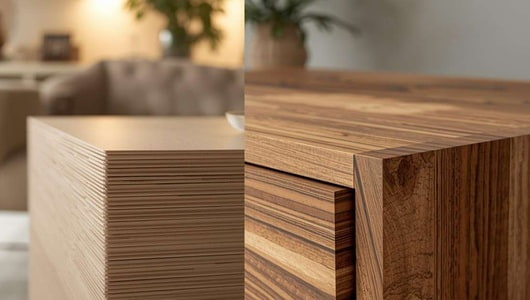
Solid wood is natural wood taken directly from trees like teak, sheesham, mango, or sal. It is not mixed or manufactured. What you see is exactly what you get—pure wood.
Furniture made from solid wood is known for its strength and durability. It can handle heavy weight and rough use without much damage. Many traditional Indian homes still have solid wood furniture that is 20–30 years old and still usable.
It also has a natural grain pattern that gives a premium and rich look. No two pieces are exactly the same, which adds to its charm.
However, solid wood is expensive. It can also expand or shrink slightly with changes in weather, especially in humid areas. Proper care and polishing are needed to maintain it.
What is Plywood?
Plywood is an engineered wood made by layering thin sheets of wood and bonding them together. It is designed to be stable and cost-effective.
Unlike solid wood, plywood does not come from a single piece. It is manufactured to provide uniform strength and reduce natural defects. Because of this, it is widely used in modern furniture, especially modular kitchens, wardrobes, and office setups.
Plywood is lighter than solid wood and easier to work with. It is also more resistant to cracking and warping due to weather changes.
The biggest advantage is price. Plywood is much more affordable, which makes it suitable for budget-friendly homes.
However, it is not as strong as solid wood in the long run. If exposed to water for a long time, it can get damaged. Its lifespan is generally shorter compared to high-quality solid wood.
Durability Comparison
If durability is your top priority, solid wood clearly wins. It is stronger and can last for decades with proper care.
Plywood is durable too, but mainly for moderate use. It works well for cabinets and shelves but may not match the lifespan of solid wood in heavy-use furniture like beds or sofas.
Cost Difference
This is where plywood has a clear advantage. Solid wood furniture can be quite expensive, especially if it is made from teak or sheesham.
Plywood offers a much more affordable option. You can get stylish and functional furniture at a lower cost, which is why it is common in urban homes.
Maintenance and Care
Solid wood needs regular care. Polishing and protection from moisture are important to keep it in good condition.
Plywood is easier to maintain. It usually comes with laminates or finishes that protect it from daily wear and tear. However, once damaged, it is harder to repair compared to solid wood.
Appearance and Style
Solid wood has a natural and timeless look. It adds warmth and richness to interiors, especially in traditional or premium homes.
Plywood, on the other hand, offers more design flexibility. It can be finished in many colors and textures, making it ideal for modern interiors.
Which One Should You Choose?
There is no single answer. It depends on your needs.
If you want long-lasting, strong, and premium furniture, solid wood is the better choice. It is ideal for beds, dining tables, and pieces that you plan to use for many years.
If your budget is limited or you prefer modern designs, plywood is a practical option. It works best for wardrobes, kitchen cabinets, and lightweight furniture.
Final Thoughts
Both plywood and solid wood have their own place in a home. One is not completely better than the other—it depends on how you plan to use it.
A smart approach is to mix both. Use solid wood for heavy, long-term furniture and plywood for modular or budget-friendly setups. This way, you get the best of both worlds without overspending.
In the end, the right choice is the one that fits your lifestyle, budget, and daily needs.